

Creating content in the healthcare and health-tech industries isn’t easy. You want to educate, build trust, and stand out—but it often feels like your message isn’t landing the way you hoped. I get it—I've seen so many brands struggle with this.
In this post, I’ll break down a few straightforward (but powerful) content marketing strategies to help you connect more meaningfully with your audience and build a stronger brand. And to make it real, I’ll share two examples from healthcare organizations that used content to drive real results—plus how you can apply those same tactics to your own strategy.
Here are seven practical, high-impact strategies I use with clients to help health-tech brands create content that connects, converts, and builds long-term trust.
Every great content strategy begins with a strong foundation: your strategic narrative. You need to understand:
From there, you can craft a value proposition that speaks to their goals and challenges—and shape a brand voice that feels authentic and consistent across every touchpoint.
Content isn’t valuable unless it’s seen by the right people. I always encourage brands to map their audience behavior to a mix of owned, earned, and paid channels:
Focus on channels that align with your audience’s habits. For example, B2B buyers might prefer long-form content or white papers, while consumer-facing audiences are more likely to engage with short-form video on Instagram or YouTube Shorts.
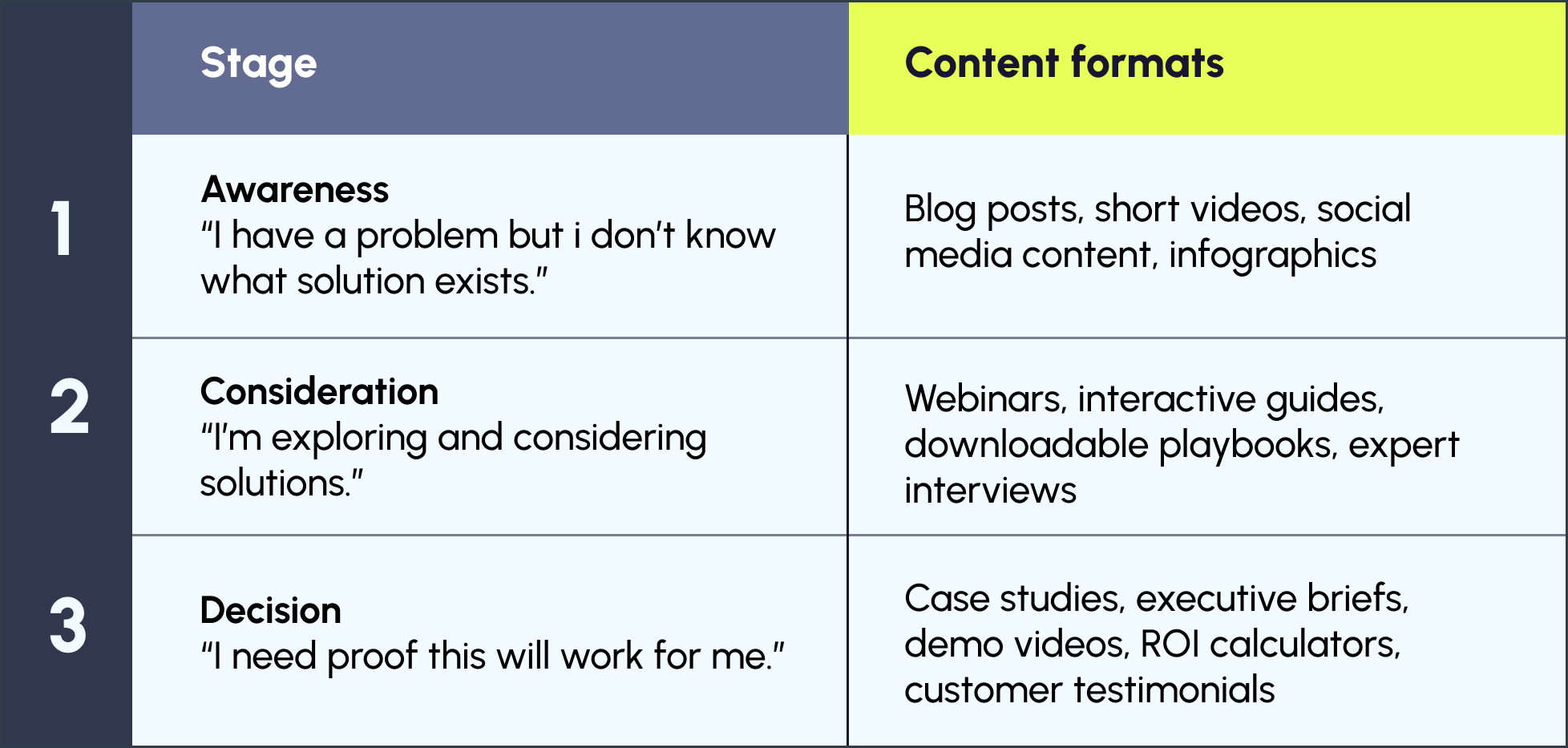
The biggest mistake I see? Creating the same type of content for every stage of the funnel.
You need different formats for different moments in your buyer's decision-making process. Here’s a snapshot:
Too many brands get the words right but ignore the visual experience.
When your messaging and visuals work together seamlessly, it creates a recognizable, trusted brand. I always recommend investing in:
Whether it’s a one-pager, a LinkedIn carousel, or a customer video, it should feel unmistakably you.
In healthtech especially, trust is everything—and shallow or generic content erodes it.
Instead of pumping out endless blog posts, focus on:
For example, don’t just write “5 Ways to Improve Provider Mental Health.” Instead, create something more targeted: “5 Ways Health Plans Can Reduce Burnout Among Providers.” The more specific, the more impactful.
A strong content calendar isn’t just a list of publish dates—it’s a roadmap. I like to build calendars that:
This provides consistency without rigidity—and allows your content to stay timely and useful.
To make content marketing worth the investment, you have to track what’s working.
Set clear goals like:
Then use tools like Google Analytics, HubSpot, or your CRM to track performance. But don’t just collect the data—act on it. Refine, iterate, and optimize over time.
Goal: Position the brand as a healthtech thought leader and capture leads from health plan decision-makers.
What To Track:
Optimization Tip: If engagement is high but downloads are low, revisit your call to action—or reduce the number of fields in your form.
Goal: Drive adoption of a digital health platform by highlighting workflow benefits.
What To Track:
Optimization Tip: If registrations are strong but attendance drops, send extra reminders and offer a recorded version for convenience.
Great content doesn’t happen by accident. It takes clarity, consistency, and an understanding of what your audience actually needs at each stage of their journey.
If you build a strong narrative, align your distribution to real behaviors, and measure what matters—you’ll see content become more than just a marketing task. It becomes a growth engine.
I hope these tips help you level up your health tech content strategy—and if you’re looking for experienced healthcare marketing consultants to support your next move, let’s connect.

%201.svg)

Best Friend Jack understands the challenges and opportunities confronting health-tech clients at every stage of the funnel. Get in touch for a complimentary brand audit today.
